
The car was expected to have a price tag of Rs 10 lakh and launch was slated for this June.

Known for its phones and emerging from nowhere in the segment, it might take on the scooter Goliaths.
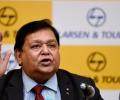
'Revival is happening slowly.' 'But that is, if the pandemic is controlled.'

In a communication to the empowered committee on PLI recently, the Indian Cellular & Electronics Association (ICEA) has stated that except one player (Samsung), all the other eight players (which include vendors of Apple Inc) selected under the scheme were facing numerous challenges in fulfilling the qualification criteria.

For development finance institution to succeed now, the government must stand like a rock behind it and be patient.
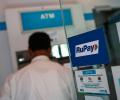
RuPay is working on how to increase offers to customers. It is also focused on technology innovation in the card payment system.

As a tech services company, Ola has never been in hardcore manufacturing. And unlike in ride hailing, which is a two-player market (Uber is the only other competitor), in two-wheelers it faces many entrenched players. But most of all, rivals say Ola's targets are out of sync with most, even ambitious, projections.

Disney-Star generated advertising revenue of over Rs 27 billion for IPL 2020.

The ministry of corporate affairs (MCA) has launched a probe into the books of Edelweiss Asset Reconstruction Company (EARC) following allegations by a whistleblower of fund diversion and irregularities. The whistleblower, Paras Kuhad, a former additional solicitor general of India, had written to the Prime Minister's Office and the Reserve Bank of India (RBI). Kuhad has alleged that Edelweiss Group and Caisse de depot et placement du Qubec (CDPQ), a Canadian institutional investor, which hold stakes in the ARC, diverted funds and did not adhere to norms while making investments in EARC's instruments. Sources have indicated that a probe has been initiated, but the MCA did not comment on the issue.

Italy may be the home of premium buffalo mozzarella cheese, but India could soon give the country a run for its money in this regard. India's largest dairy cooperative, Amul, has submitted a plan to the government, aiming to turn the country into a global hub for the export of mozzarella cheese made from buffalo milk, which is sold at a hefty premium around the world. Mozzarella cheese is one of the products identified by the government for support under its Rs 10,900 crore production-linked incentive scheme (PLI), to give a massive push to food processing exports as well as to build Indian food brands.
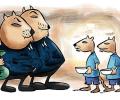
Individuals flew the flag for philanthropy in FY20, escalating their contribution significantly in comparison with company and foreign fund donations, according to the Dasra/Bain & Co India Philanthropy Report of 2021. Funding by individual philanthropists went up by 42 per cent from Rs 21,000 crore in FY19 to Rs 30,000 crore in FY20.

Indian corporate are fast tapping the international bonds market to raise funds for their operational expenses even as they reduce their presence in the rupee bond market. As bonds are costlier for companies and investors are more sceptical than the banks, chief financial officers say they are looking at other avenues for raising funds in the coming months as dollar bond rates are lower in the range of 100 to 250 basis points. "For corporate with reasonable credit quality, the Indian bond market has become less of an option from a cost point of view. "In addition, conditions imposed in the Indian bond market by investors post Franklin episode have also become very onerous," said Prabal Banerjee, president-finance of Bajaj group. "Hence very few corporate are looking at the local bond market for resource mobilisation, since both, bank loans and the overseas bond markets are much more attractive," he said.
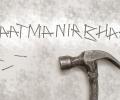
Recently, Prime Minister Narendra Modi met over 40 CEOs across broad swathes of industry, ranging from makers of mobile devices, auto components, food products to telecom networking equipment and pharmaceuticals. The agenda: To discuss how to make India an integral part of the global supply chain. The focus of the discussion would be the much touted yet not so well understood production-linked incentive scheme (PLI), the centrepiece of the government's drive to massively boost the manufacturing sector. To do so, the government has created a war chest of over Rs 197,000 crore to be paid out as incentives to over 14 industries in five years. There are three objectives to the scheme, two explicitly stated, one implied.
The bank will now be in a position to resume normal lending activity, including corporate lending, with tightened risk management framework.

Over 10 Indian start-ups with total valuations of $84 billion (some are planning fresh fund-raising) are bracing to launch initial public offerings (IPOs) in the next 36 months. While the size of their IPOs is under discussion, estimates are that they would together raise a minimum of over $8-10 billion during the initial listing.

Several factors have held India back. One is DoT policy somersaults and lack of clarity on whether to or not to ban Chinese gear makers.

The combined deposits of its Indian operations stood at SGD 9 billion and net advances were at SGD 5.6 billion at the end of December 2020.

The Big Two telecom companies have accelerated their moves towards this next-gen technology, though they have chosen very different routes to getting there.

The hoarding of cash accentuated from the very start of 2020, when the coronavirus pandemic started taking hold the world over, and fear of the pandemic prodded people to remain liquid for emergency use.

Today, Vachani's public-listed company, Dixon Technologies, has gone beyond manufacturing just television sets. Armed with private equity funding from Motilal Oswal eight years ago, it has transformed itself into a Rs 4,400 crore electronic manufacturing services major, which now straddles lighting products, home appliances, feature phones, LED bulbs, amongst others. A two-part series looks at how two home-grown manufacturers are leveraging the govt's production-linked incentive scheme.
 © 2026 Rediff.com - Advertise with us - Disclaimer - Privacy Policy - Sitemap - Feedback - About us - Terms of use - Grievances